Mycelia Pilgrimage
Walking Together Into the Sierra Norte
Two journeys through the forests of Oaxaca, traditional medicine, community, ceremony and the living landscape of the Pueblos Mancomunados.
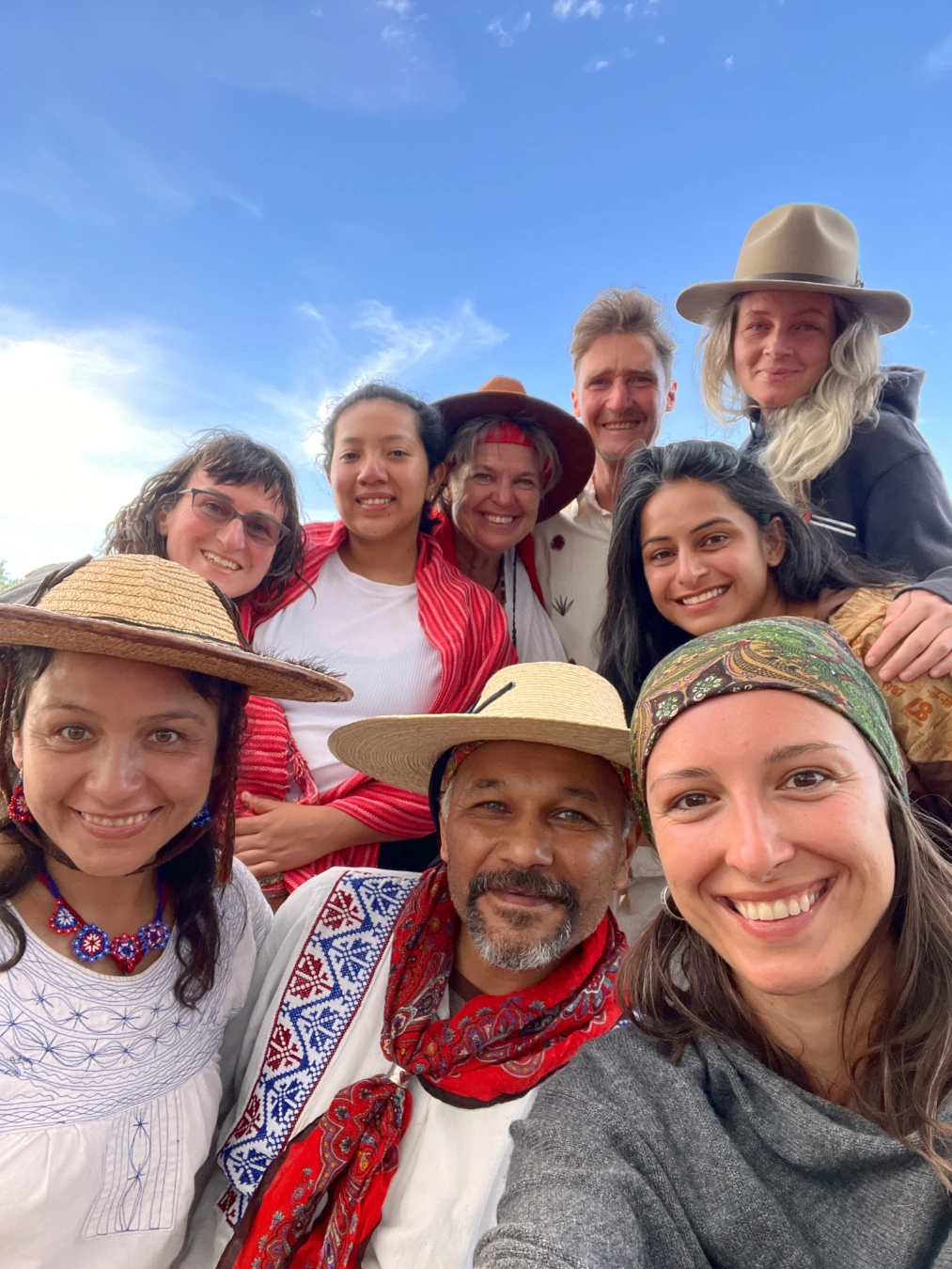
In August, we welcomed two very special Mycelia pilgrimages into the Sierra Norte of Oaxaca.
Both journeys were different, yet both followed the same thread: a deeper connection with the land, with traditional knowledge, with the people who carry it, and ultimately with ourselves.
Our days took us into the forests of the Pueblos Mancomunados, into the world of medicinal plants and mushrooms, into the traditions of Sierra Norte community ecotourism, and finally to Santa Catarina Lachatao, where we prepared for two powerful ceremonies and a day of integration through Temazcal.
For us, pilgrimage is never simply about arriving somewhere.
It is about how we walk, who walks beside us, what the land reveals, and what we are willing to receive.
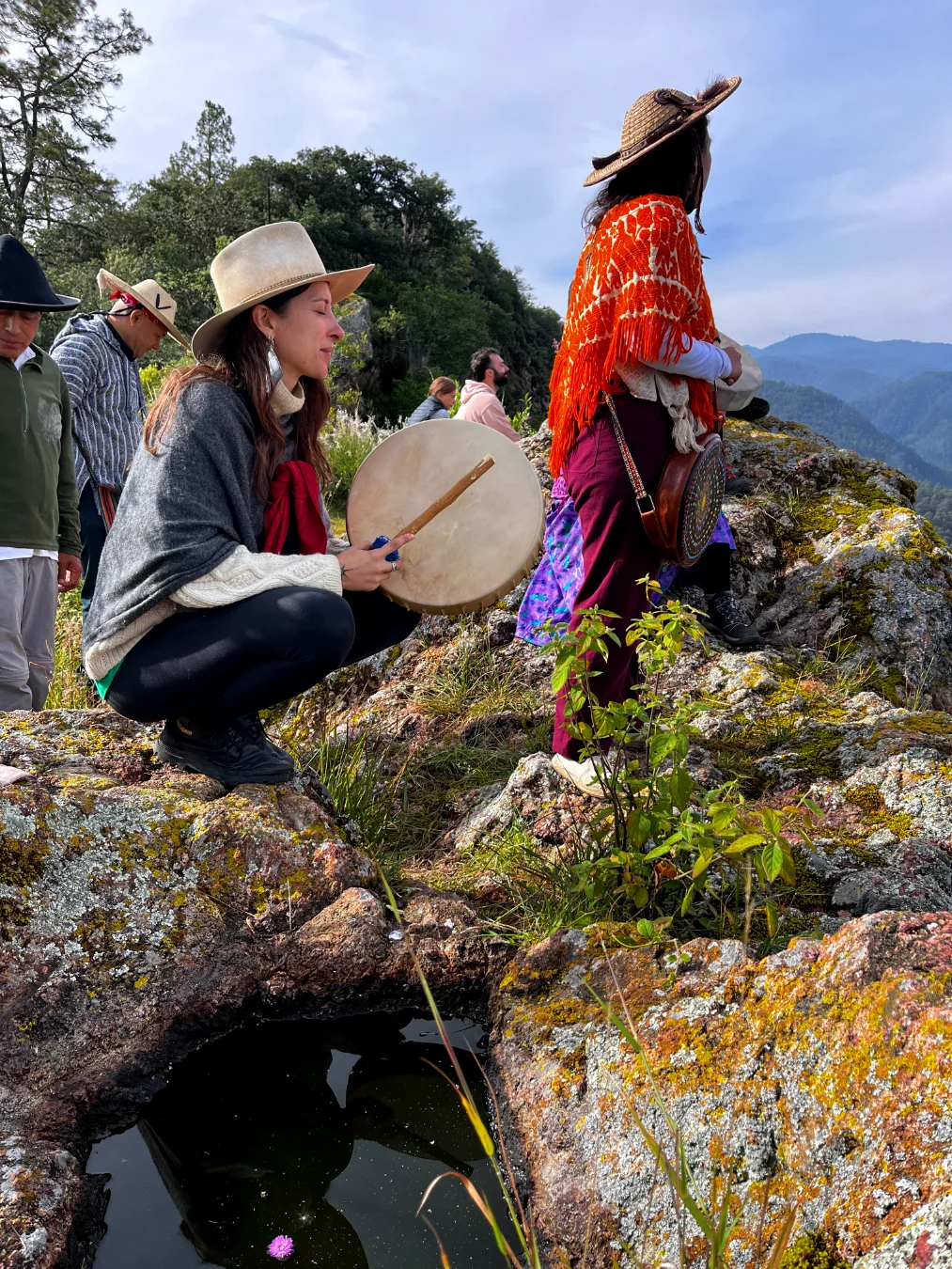
Walking into silence
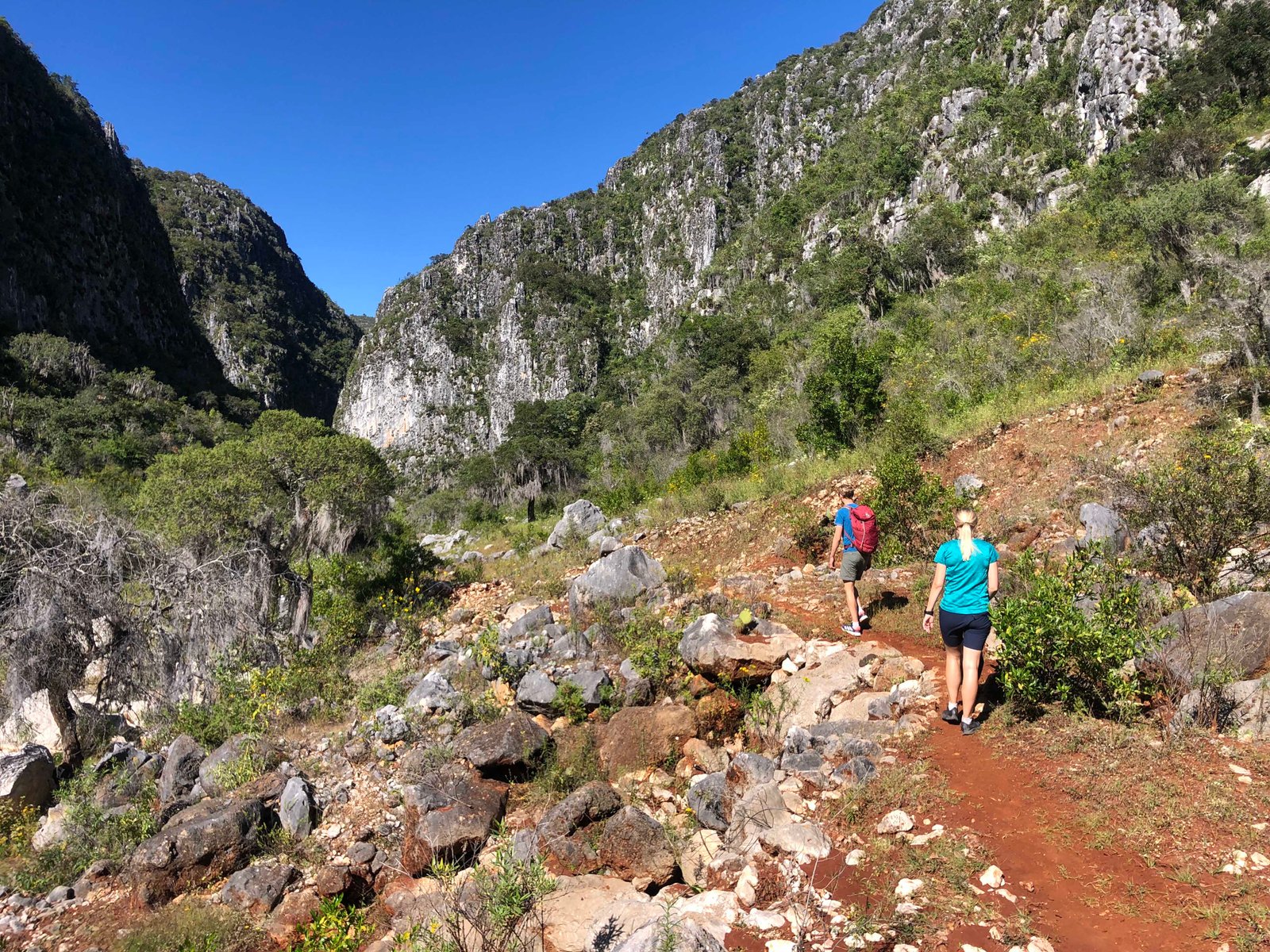
One of the most beautiful moments of our time in the Sierra Norte was a walk we did in silence.
No explanations. No conversation. No need to fill the space.
Just walking.
Step by step, we allowed ourselves to become quieter and more receptive—to the sound of the forest, the earth beneath our feet, the birds, the wind and our own breathing.
There is something that changes when we stop talking.
The forest no longer feels like somewhere we are visiting.
We begin to feel that we are part of it.
This silent walk became a way of connecting with the land on a deeper level, of listening not only with our ears but with our whole body.
This is one of the gifts of walking through the Sierra Norte of Oaxaca: the forest gives us space to remember how to listen.
Traditional medicine and the wisdom of the forest
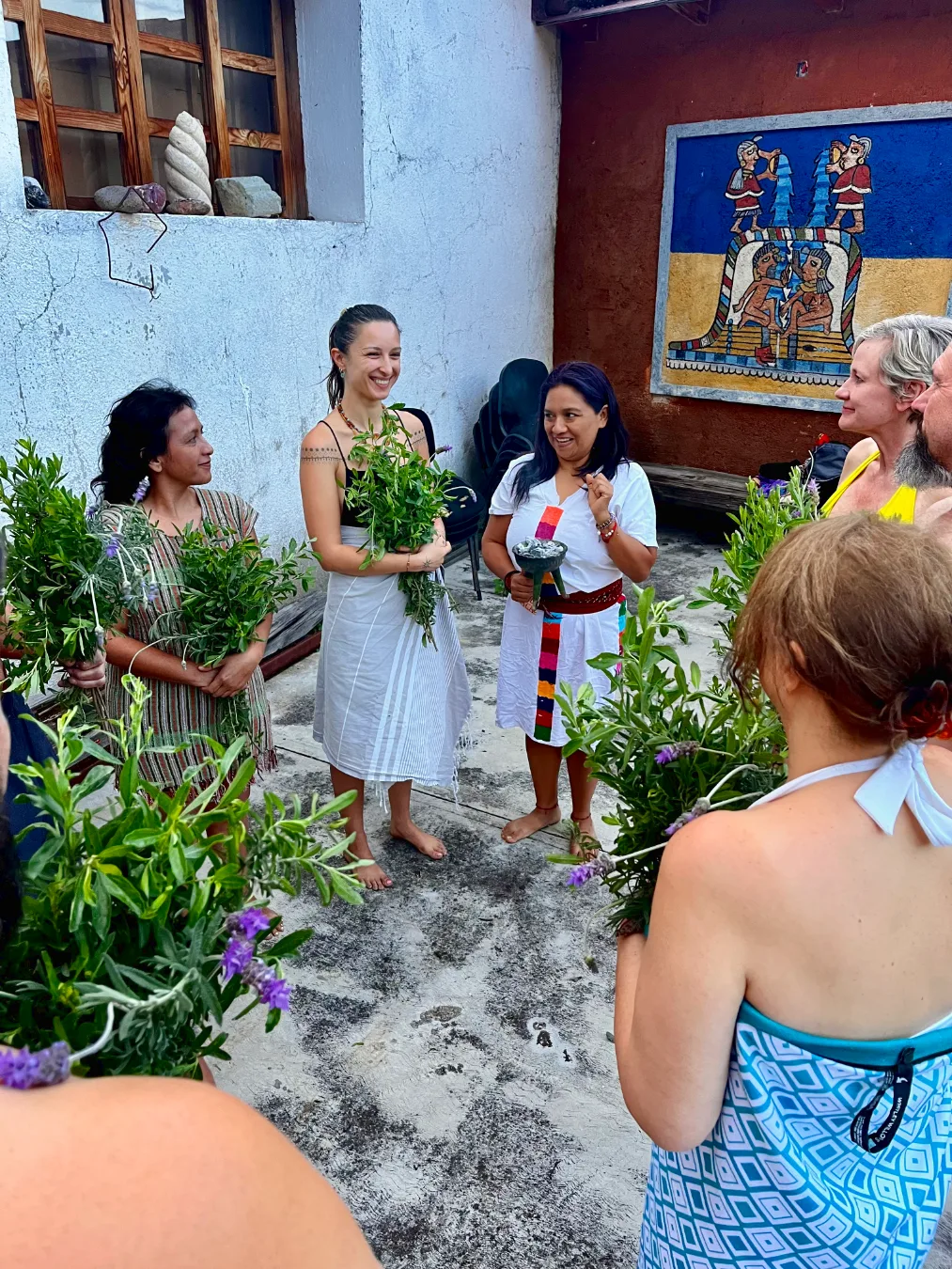
One of our days was spent with Ester , our goddaughter, guide and teacher of traditional medicine.
She shared her knowledge of medicinal plants and the ways these plants have been understood and used within local traditions.
We walked slowly through the forest, learning to recognize the plants, paying attention to their forms, their qualities and their relationship to the landscape.
This was not knowledge separated from nature.
It was knowledge born from relationship.
The plants, the forest, the people and the mountains are part of the same living system.
We also made a small offering to the land.
Because when we enter a place that gives something to us, we believe it is important not only to receive, but also to give something back.
This is one of the principles that guides our pilgrimages: to walk with respect, to learn from local knowledge and to enter the landscape as a guest rather than a consumer.
Mushrooms, food and the joy of learning together
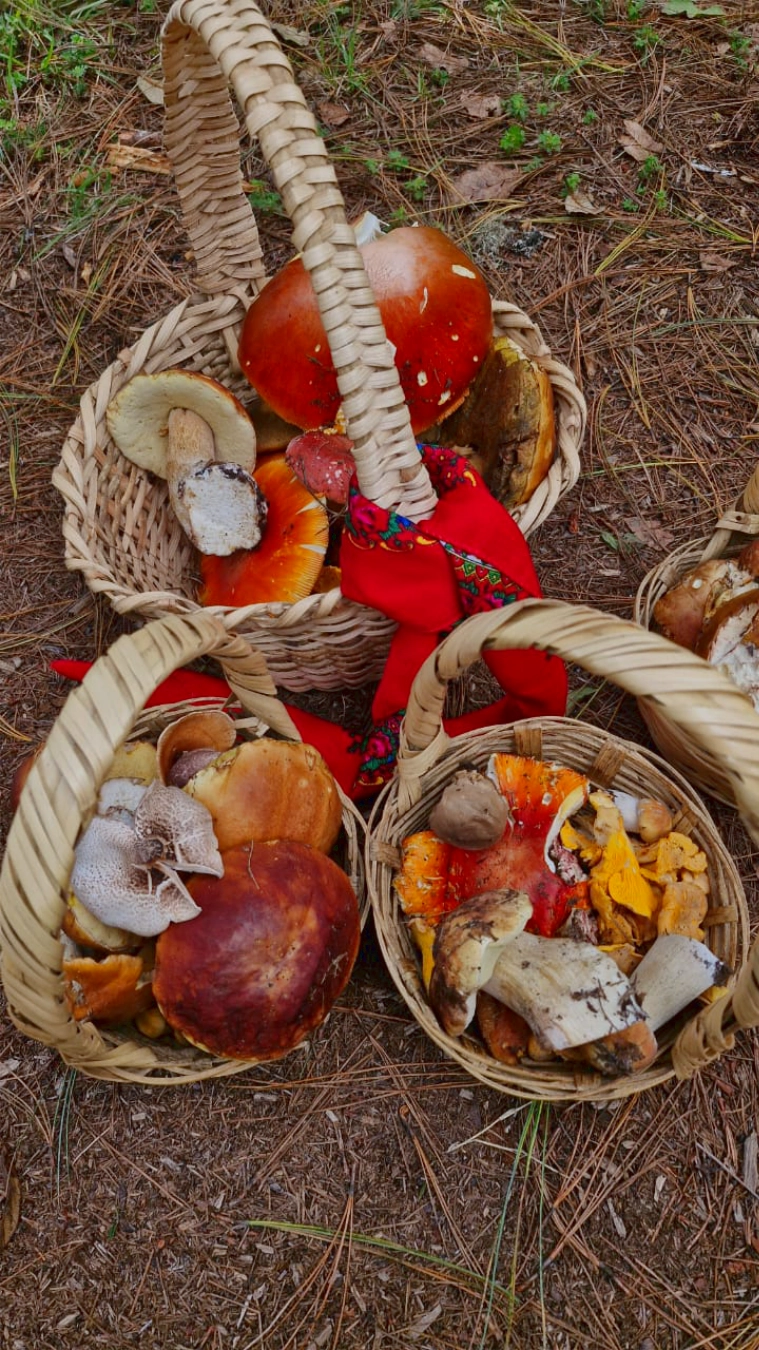
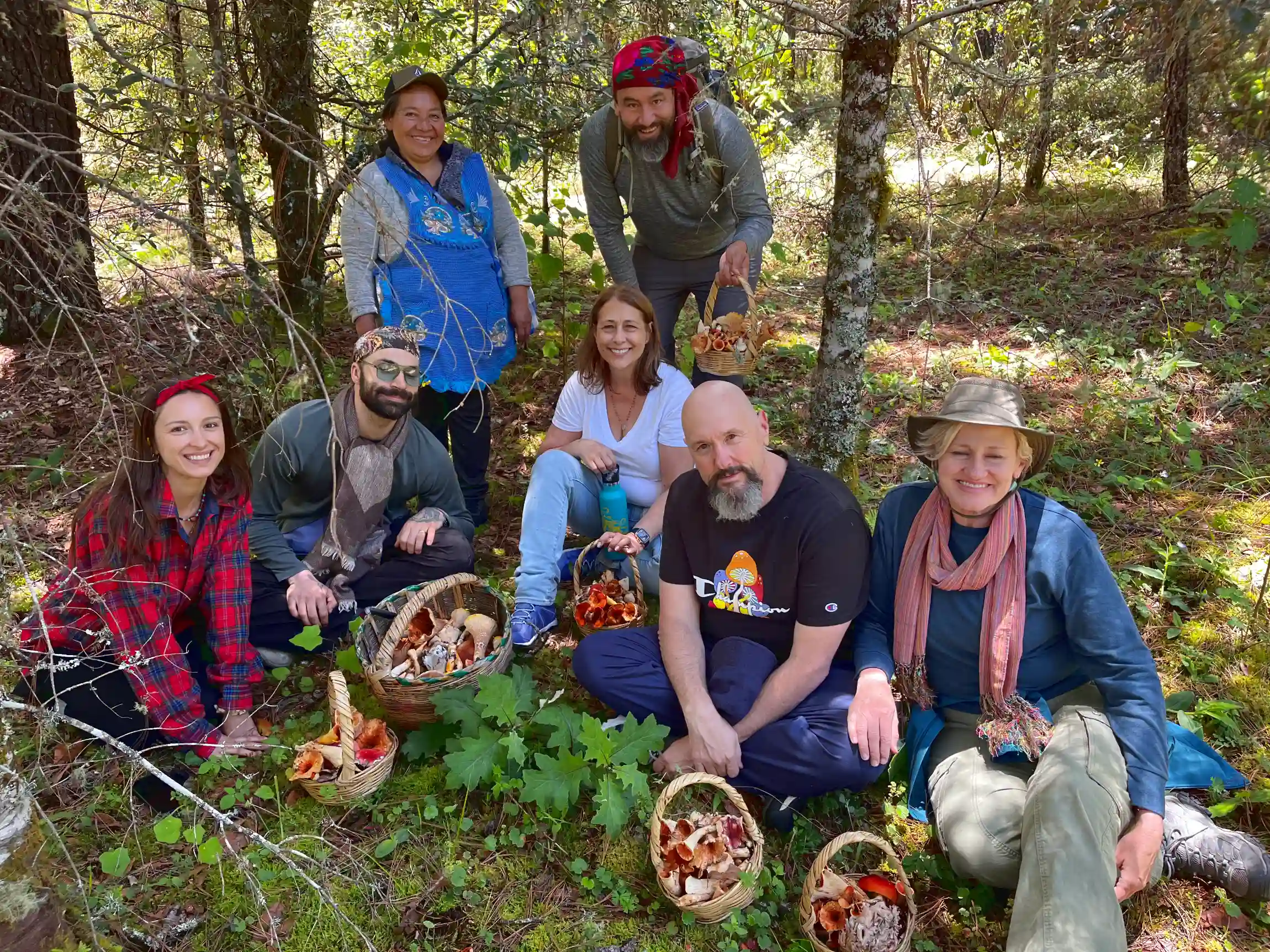
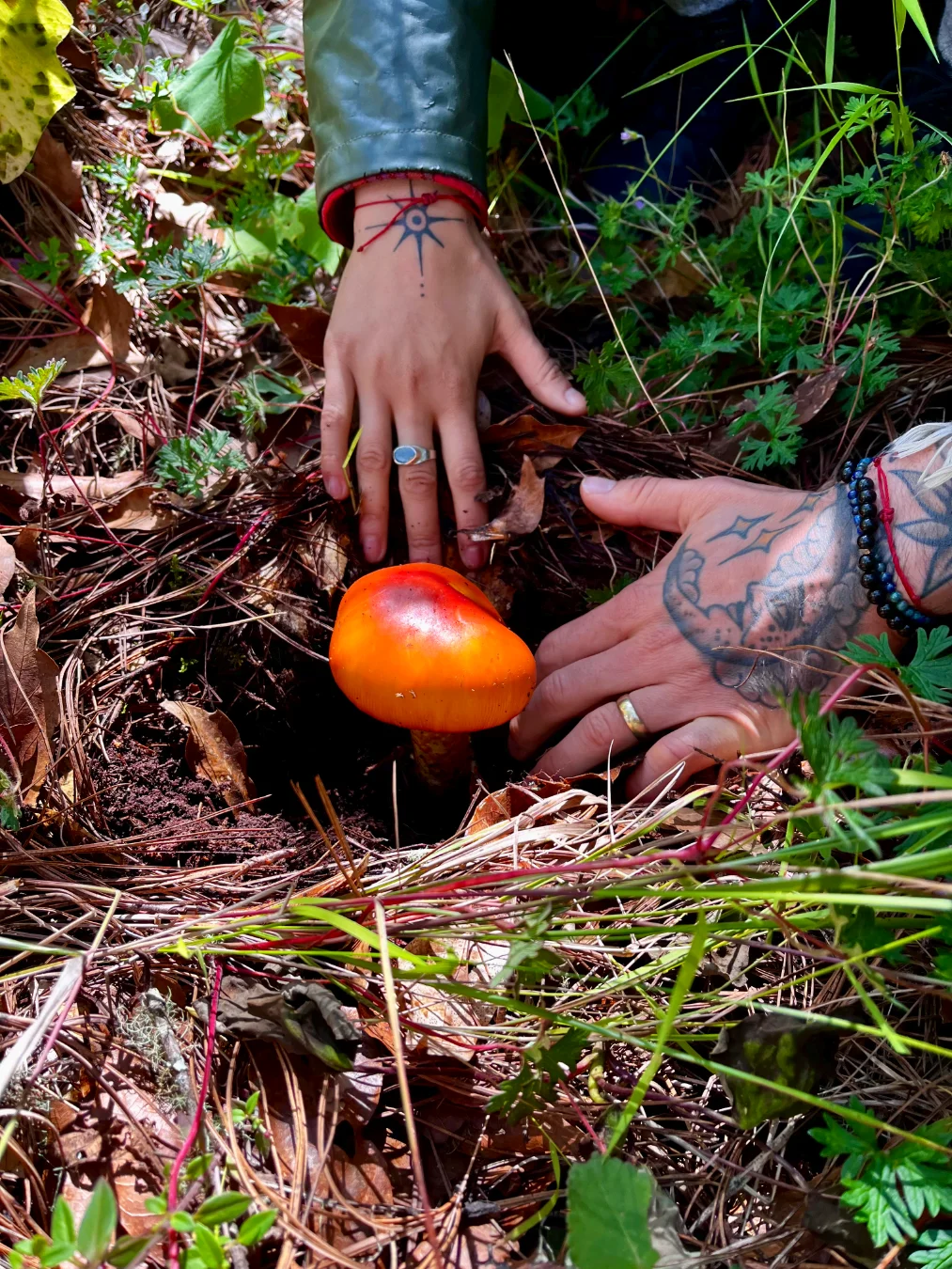
Another day brought us into the forest with Marta, exploring the world of wild mushrooms.
There was discovery, curiosity, concentration—and a lot of laughter.
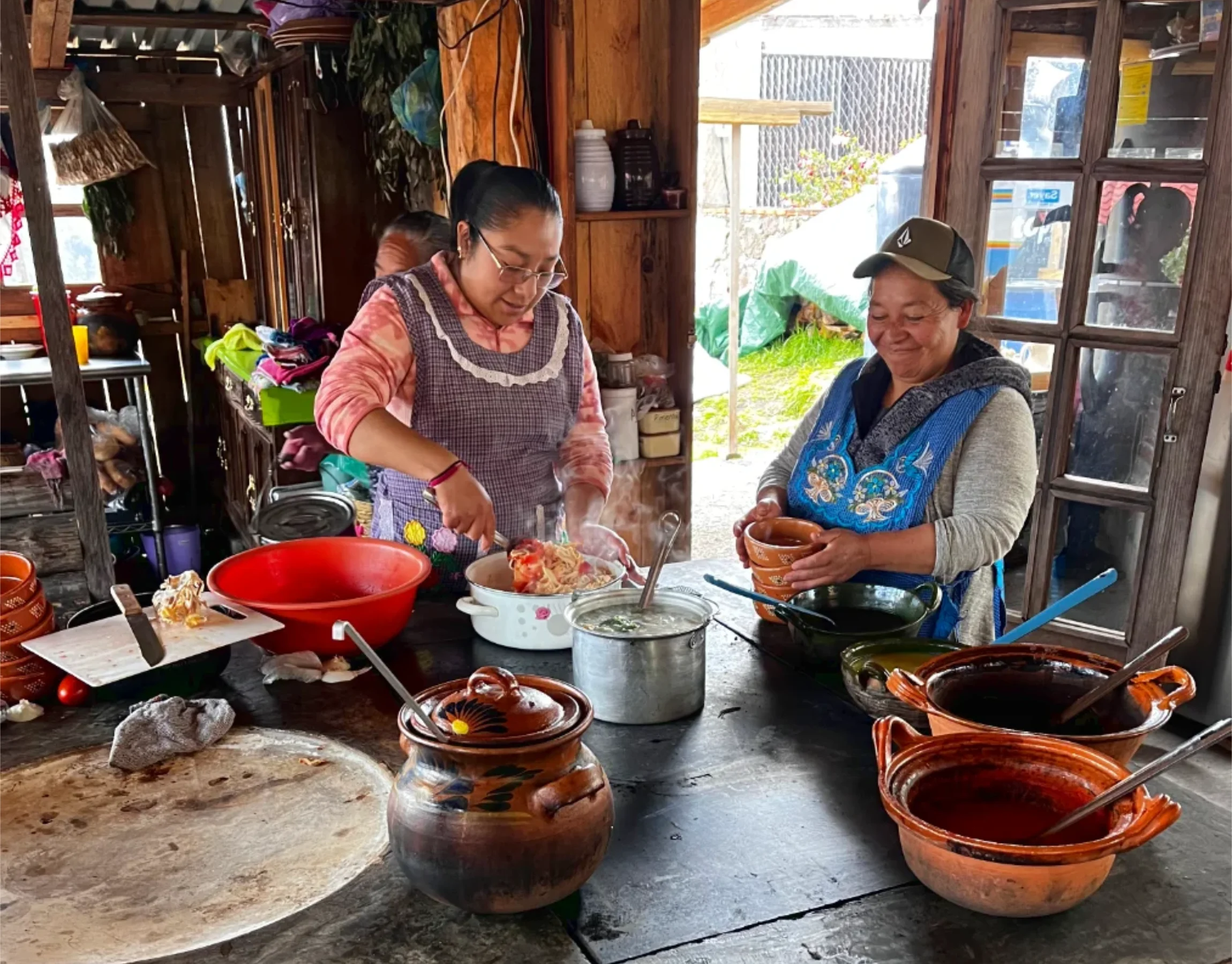
We searched among the trees, learned about the mushrooms growing in the Sierra Norte, gathered what the forest offered us and then prepared them together.
There is something wonderfully grounding about this kind of traditional knowledge.
You learn with your hands.
You walk, look, smell, touch, gather, cook—and then sit together and eat.
Food becomes another way of connecting with the territory.
The knowledge of mushrooms is not simply botanical knowledge. It is also part of a larger relationship with the forest, seasonal cycles, local foodways and the knowledge passed from one generation to another.
And sometimes learning can be incredibly joyful.
We had so much fun together.
From the forest to Lachatao
After our days in the forest, we continued deeper into the Pueblos Mancomunados of the Sierra Norte, arriving in Santa Catarina Lachatao.
Lachatao is one of the Zapotec communities of the Pueblos Mancomunados, a region known for its forests, community-based tourism, hiking and close relationship with the natural landscape. Traditional medicine and local knowledge are also part of the cultural richness visitors can encounter here.
But for us, Lachatao is more than a destination.
It is a place where we can slow down.
A place where the mountains invite us to listen.
A place where we can prepare ourselves for ceremony.
Before entering ceremony, we consciously begin to leave behind the noise of everyday life.
We become quieter.
We listen inwardly.
We prepare the body, the heart and the spirit.
When ceremony opens
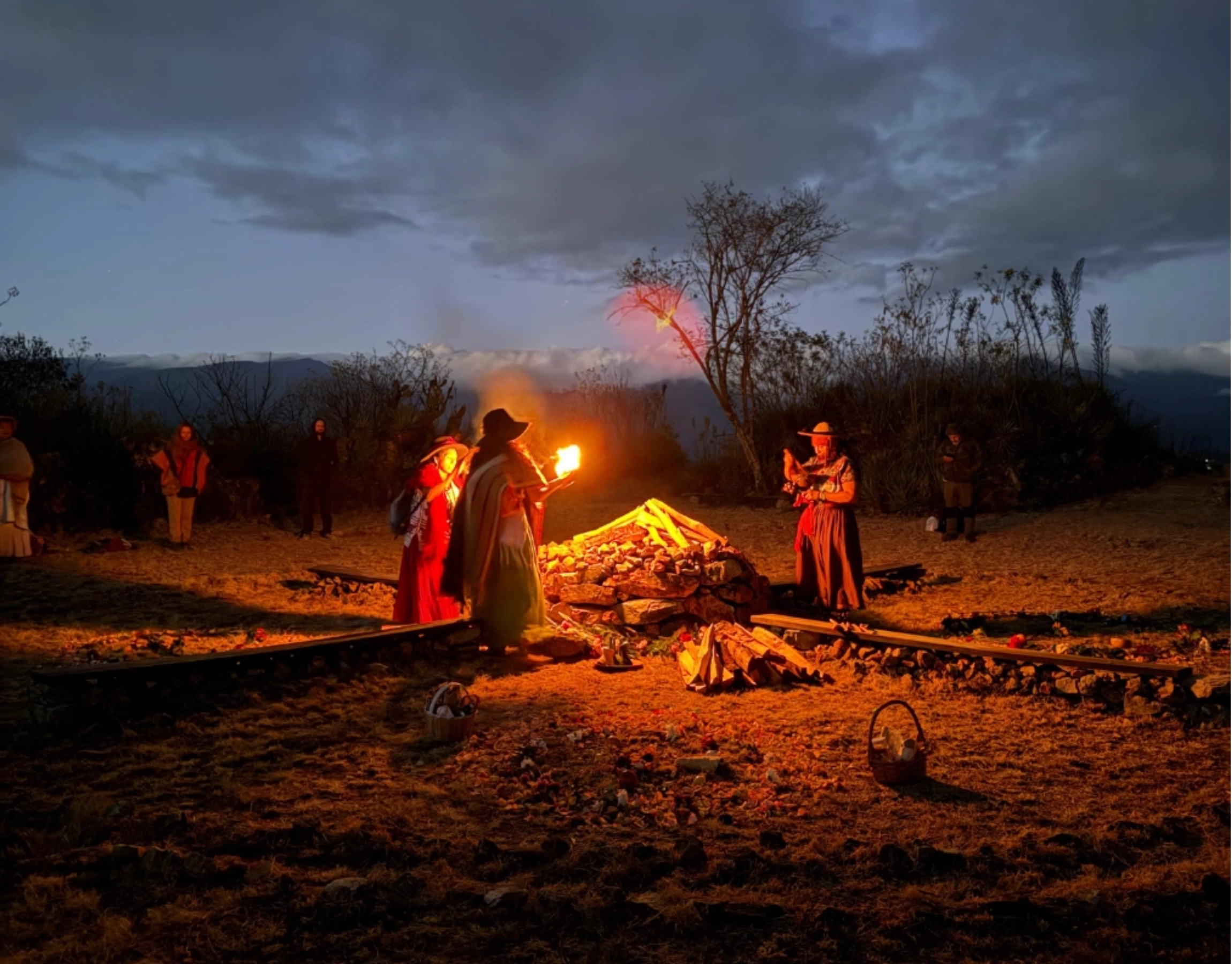
Both ceremonies were deeply powerful.
Each unfolded in its own way, and as always, we cannot know beforehand what will come through.
There were visions, emotions, memories, insights and teachings.
So much information came through.
Each person experienced their own journey, and yet there was also something shared: the feeling of being held by something larger than ourselves.
This is one of the things we treasure most about walking together.
We don’t come with the idea that everyone should have the same experience.
We create the space, prepare the circle and walk alongside each other.
Then we allow each person to meet whatever is waiting for them.
The message of the Earth
And for me, there was one message that kept returning.
Again and again.
In ceremony.
In the Temazcal.
In the silence.
The message was simple:
“It is time to celebrate.”
At first, I found this almost strange.
How can we be asked to celebrate when there is so much happening around us?
We are living through floods and droughts, fires and lack of rain, disappearing waters, environmental destruction, uncertainty and so much suffering in the world.
And yet the message kept coming:
Celebrate.
Not because everything is fine.
Not because we should close our eyes to what is happening.
But because something deeper is moving.
The Earth seemed to be saying:
I am recalibrating.
Something is shifting.
Something is reorganizing itself.
And what comes out on the other side can be much more beautiful than what we are able to imagine from where we stand today.
Celebration, in this sense, is not the opposite of grief.
It is part of how we move through transformation without losing our connection to life.
To celebrate is to remember that the Earth is still alive.
That seeds are still waiting beneath the soil.
That forests know how to regenerate.
That water always seeks a way to flow.
That life carries an extraordinary intelligence to renew itself.
The message felt less like an invitation to forget what is happening and more like an invitation to trust the deeper movement of life.
Integration through Temazcal
After the intensity of the ceremonies came the day of integration.
Rather than immediately returning to everyday life, we stayed together and allowed what had happened to settle.
The Temazcal became a beautiful container for this process.
Held with so much love, the Temazcal brought us back into the body.
Back to the earth.
Back to the elements.
Back to ourselves.
After the intensity of ceremony, the warmth, steam, darkness and rhythm of the Temazcal offered another kind of teaching:
Integration doesn’t happen through understanding.
Sometimes it happens through feeling, breathing, sweating, releasing and simply being held.
What remains
Looking back at these two August Mycelia pilgrimages in Oaxaca, what stays with us most is not one particular ceremony or one particular teaching.
It is the whole tapestry.
The silent walk through the Sierra Norte forest.
Ester sharing the knowledge of traditional medicine and medicinal plants.
The small offering to the land.
Marta teaching us about mushrooms while we laughed together.
The food we prepared and shared.
The generosity of the forest.
The mountains of the Pueblos Mancomunados.
The preparation.
The ceremonies.
The moments of silence.
The laughter.
The tears.
And finally, the loving embrace of the Temazcal in Lachatao.
And underneath it all, this message:
It is time to celebrate.
Maybe this is also what pilgrimage teaches us.
That we can hold two truths at the same time.
We can witness what is happening to our planet and still celebrate life.
We can grieve what is disappearing and still trust regeneration.
We can feel the uncertainty of transformation and still listen for the new world trying to emerge.
Our Mycelia pilgrimages are an invitation to experience Oaxaca beyond conventional tourism—to walk through the forests, meet the people who carry traditional knowledge, discover the richness of community-based ecotourism, share food, listen to the land and enter into ceremony with respect.
Because pilgrimage is not only about going somewhere sacred.
It is about learning to recognize the sacred in the way we walk.
In the forest.
In the silence.
In the plants and mushrooms.
In traditional medicine.
In the mountains of the Sierra Norte.
In the communities of the Pueblos Mancomunados.
In ceremony.
In the people who accompany us.
And in the invisible threads that connect it all.
**We came to walk together.
And somewhere along the way, the forest began walking with us.
And the Earth whispered:
It is time to celebrate.**
Traditional Medicine and the Wisdom of the Forest
By Tierra Sagrada Ecotours on August 26, 2026
Search by Tags